

A Berlin copywriter told me she recently turned down an €8,000 project.
The rate was good. The brief was clear. The client was ready to move forward. What stopped her was a single phrase in the contract: “brand strategy consulting.” That wording made her hesitate. She wasn’t sure whether the project still fell under her Freiberufler status or whether parts of it might require registering a Gewerbe.
In Germany, that distinction is not trivial. It affects registration, Gewerbesteuer, reporting obligations, and sometimes how clients assess you internally. The categories sound clear in theory — Freiberufler for creative and academic professions, Gewerbe for commercial activities — but modern freelance work rarely fits neatly into one box. Many projects combine creative execution, advisory input, and strategic thinking. The legal language has not evolved at the same pace.
She did what most careful freelancers do. She searched online and found conflicting answers. She called the Finanzamt and was advised to speak with a Steuerberater. A Steuerberater quoted a few hundred euros to review the classification properly. By the time she might have received a definitive answer, the client had already chosen someone else.
Nothing dramatic happened. There was no audit, no penalty. Just uncertainty, delay, and a lost contract.
This kind of hesitation shapes behaviour over time. Because misclassification can lead to backdated Gewerbesteuer, corrections to prior filings, or questions around KSK eligibility, many freelancers become cautious. They simplify service descriptions. They avoid certain terms. They sometimes decline projects that feel ambiguous, even when the work itself is straightforward.
The framework was designed around defined professions: journalist, architect, engineer. Today, a copywriter may also consult on brand positioning. A designer may advise on digital strategy. A photographer may offer content planning alongside production. The lines blur, but the categories remain rigid.
As a result, freelancers carry the responsibility of interpreting where they stand. Clients, particularly larger ones, may also want reassurance that the classification is correct before signing.
For some professionals, working through a defined employment structure changes that dynamic. The formal relationship is clearly set up from the beginning, and the project scope can expand without triggering a separate classification question each time a description shifts. That is how Factofly is structured: the work remains independent, while the formal layer sits within a clear employment framework.
Others prefer to stay fully independent and navigate the categories directly. Both paths are valid. The point is that the uncertainty itself has a cost.
An €8,000 project should primarily be a creative and commercial decision. In Germany, it can also become a classification question.
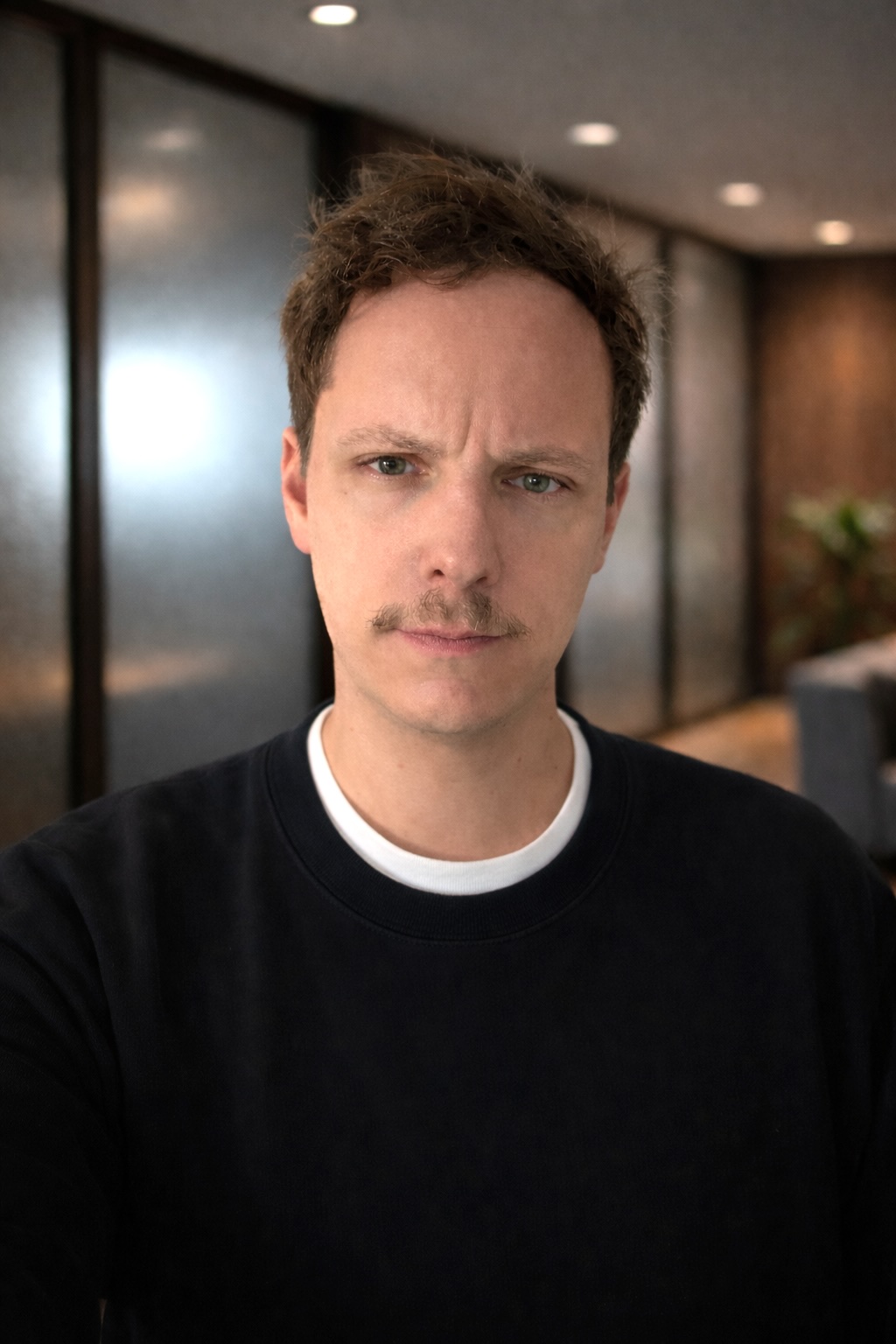
Leo is our Director for Germany. He has over 15 years of experience working with and within companies such as HERE, Babbel, Flink and Microsoft.
At Factofly, he focuses on building legally sound structures for project-based work in Germany.
A Berlin copywriter told me she recently turned down an €8,000 project.
The rate was good. The brief was clear. The client was ready to move forward. What stopped her was a single phrase in the contract: “brand strategy consulting.” That wording made her hesitate. She wasn’t sure whether the project still fell under her Freiberufler status or whether parts of it might require registering a Gewerbe.
In Germany, that distinction is not trivial. It affects registration, Gewerbesteuer, reporting obligations, and sometimes how clients assess you internally. The categories sound clear in theory — Freiberufler for creative and academic professions, Gewerbe for commercial activities — but modern freelance work rarely fits neatly into one box. Many projects combine creative execution, advisory input, and strategic thinking. The legal language has not evolved at the same pace.
She did what most careful freelancers do. She searched online and found conflicting answers. She called the Finanzamt and was advised to speak with a Steuerberater. A Steuerberater quoted a few hundred euros to review the classification properly. By the time she might have received a definitive answer, the client had already chosen someone else.
Nothing dramatic happened. There was no audit, no penalty. Just uncertainty, delay, and a lost contract.
This kind of hesitation shapes behaviour over time. Because misclassification can lead to backdated Gewerbesteuer, corrections to prior filings, or questions around KSK eligibility, many freelancers become cautious. They simplify service descriptions. They avoid certain terms. They sometimes decline projects that feel ambiguous, even when the work itself is straightforward.
The framework was designed around defined professions: journalist, architect, engineer. Today, a copywriter may also consult on brand positioning. A designer may advise on digital strategy. A photographer may offer content planning alongside production. The lines blur, but the categories remain rigid.
As a result, freelancers carry the responsibility of interpreting where they stand. Clients, particularly larger ones, may also want reassurance that the classification is correct before signing.
For some professionals, working through a defined employment structure changes that dynamic. The formal relationship is clearly set up from the beginning, and the project scope can expand without triggering a separate classification question each time a description shifts. That is how Factofly is structured: the work remains independent, while the formal layer sits within a clear employment framework.
Others prefer to stay fully independent and navigate the categories directly. Both paths are valid. The point is that the uncertainty itself has a cost.
An €8,000 project should primarily be a creative and commercial decision. In Germany, it can also become a classification question.
Leo is our Director for Germany. He has over 15 years of experience working with and within companies such as HERE, Babbel, Flink and Microsoft.
At Factofly, he focuses on building legally sound structures for project-based work in Germany.